
I’m using the term accurate grading to mean that grades are a valid representation of current levels of student learning. In this sense, accurate grades require an accurate measurement scale, use of valid evidence of student learning, and an effective method of combining multiple scores to create a composite grade.
A total 12 of the 25 grading practices have a primary function of increasing grading accuracy. See the practices below, along with resources that further explain them.
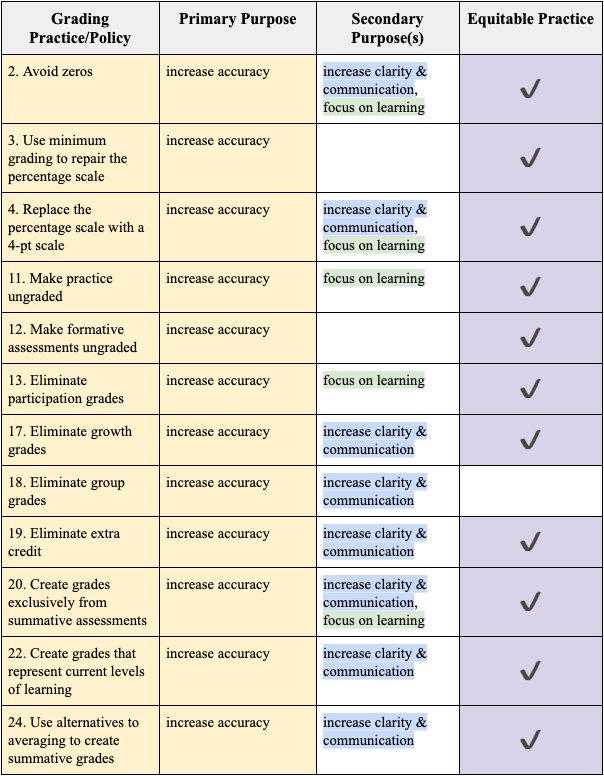
Avoid Zeros
Blog posts: “The Low-hanging Fruit of Grading Reform: Eliminating the Zero“
Video (coming soon)
Use Minimum Grading to Repair the Percentage Scale
Blog post (coming soon)
Video (coming soon)
Replace the Percentage Scale with a 4-point Scale
Blog post (coming soon)
Video (coming soon)
Make Practice Ungraded
Blog post (coming soon)
Video (coming soon)
Slides: “Separate Learning from Behavior“
Make Formative Assessments Ungraded
Blog post (coming soon)
Video (coming soon)
Slides (coming soon)
Eliminate Participation Grades
Blog post (coming soon)
Video (coming soon)
Slides (coming soon)
Eliminate Growth Grades
Blog post (coming soon)
Video (coming soon)
Slides (coming soon)
Eliminate Group Grades
Blog post (coming soon)
Video (coming soon)
Slides (coming soon)
Eliminate Extra Credit
Blog post (coming soon)
Video (coming soon)
Slides (coming soon)
Create Grades Exclusively from Summative Assessments
Blog post (coming soon)
Video (coming soon)
Slides (coming soon)
Create Grades that Represent Current Levels of Learning
Blog post (coming soon)
Video (coming soon)
Slides (coming soon)
Use Alternatives to Averaging to Create Summative Grades
Blog post (coming soon)
Video (coming soon)
Slides (coming soon)
 Practical Classroom Solutions to Grading and Assessment