A Comprehensive Approach to Grading Reform
Effective and long-lasting grading reform requires a strategic and comprehensive approach that is more than a collection of popular, progressive grading practices.
The comprehensive approach that I’m presenting here includes multiple dimensions of grading reform that enable the grades to become understandable, meaningful, fair, and aligned with the central goal of the classroom: learning.
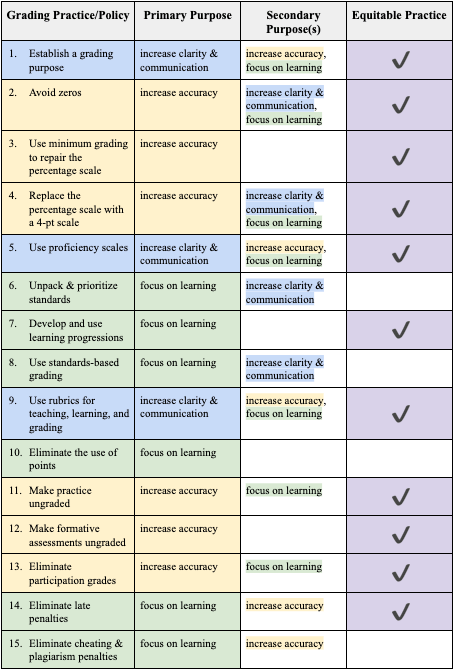
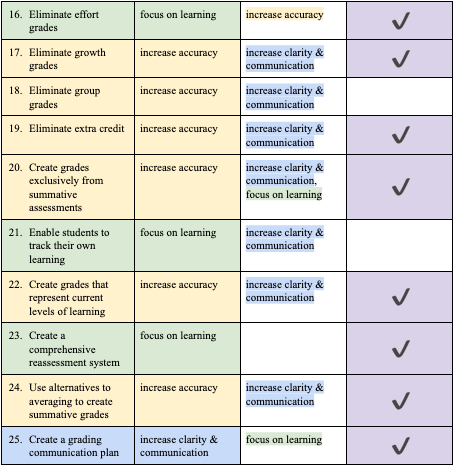
In the attached pages, I present descriptions of 25 practices that can help you to create grades that are clear, accurate, equitable, and learning-centered.
Clear Grading
Effective grading begins and ends with clarity and communication. After all, how can grades be effective if they aren’t clearly understood? Grades are merely symbols intended to communicate a larger idea determined by the classroom teacher. And if teachers are unable to communicate the details of their grading practices and the intended meaning of their grades, how useful can those grades be to the intended audience?
In this case, clear grading refers to particular practices that increase an intended audience’s understanding of the purpose and meaning of classroom grades, along with practices intended to maximize the transparency of classroom grading.
While only a small number of the 25 grading practices have a primary function of increasing clarity and communication, their importance is disproportionately high because they guide teacher decision making and help others to understand the grades.
This linked page explores four practices that serve to increase clarity and communication of grades.
Accurate Grading
I’m using the term accurate grading to mean that grades are a valid representation of current levels of student learning. In this sense, accurate grades require an accurate measurement scale, use of valid evidence of student learning, and an effective method of combining multiple scores to create a composite grade.
This linked page explores 12 practices that serve to increase the accuracy of grades.
Equitable Grading
By equitable grading, I’m referring to the process of creating grades within the classroom that ensure three key elements:
- grades communicate students’ mastery of intended learning outcomes,
- no grading practice provides any student group an advantage or disadvantage based on personal background or characteristics,
- and grading practices align with other classroom practices designed to provide all students with equal educational opportunities.
This linked page explores 19 practices that serve to increase the equity of grades.
Learning-Centered Grading
The primary goal within K-12 classrooms is to help students achieve mastery of intended learning outcomes. To that end, effective grading reinforces a learning-centered classroom, ensuring students’ grades are directly aligned to that learning.
It’s true that grades aren’t at all needed for learning to occur in the classroom, but effective grading, at the very least, shouldn’t hinder or distract from the learning focus of the classroom. However, many traditional grading practices do just that (more on this in the future).
Therefore, learning-centered grading is about using grading practices that make grades exclusively about learning and ensuring practices support this focus rather than distract from it.
This linked page explores nine practices that serve to ensure that grades are learning-centered.
25 Grading Practices that are Clear, Accurate, Equitable, & Learning-Centered
 Practical Classroom Solutions to Grading and Assessment